
What is onchain KYC?
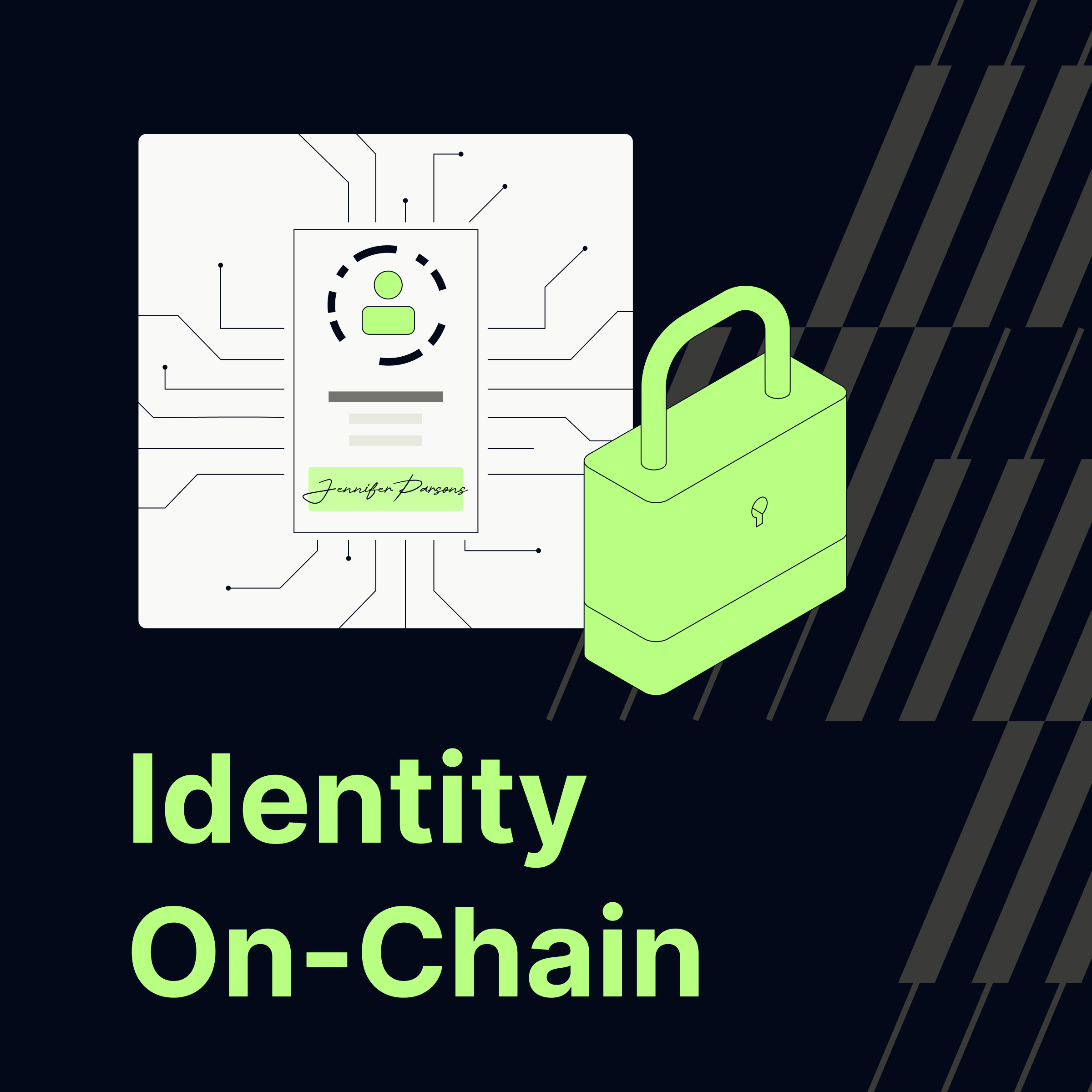
Onchain KYC is the process of verifying user identity for blockchain applications using smart contracts and oracles. Rather than handing over raw personal data to every new platform, this method allows institutions to meet regulatory standards like AML/CFT while preserving user privacy through cryptographic proofs. Think of it as a digital credential that proves you are who you say you are without exposing your entire identity history to every service you use.
This approach creates a verifiable and reusable digital identity on or off the blockchain. By leveraging decentralized identity standards, users can issue attestations that are instantly recognizable by compliant services. This reduces friction for legitimate users while maintaining the security and transparency required by regulators.
The core benefit lies in the separation of verification and usage. You verify once with a trusted provider, and that proof is stored cryptographically. When you interact with a new dApp or exchange, you present the proof, not your passport or utility bills. This minimizes the attack surface for data breaches and gives users control over their own compliance status.
Onchain kyc choices that change the plan
Adopting onchain KYC is not a simple plug-and-play upgrade. It introduces a distinct set of operational and technical variables that differ sharply from traditional centralized databases. When evaluating whether to implement this infrastructure, teams must weigh privacy preservation against data accessibility, and cryptographic complexity against user friction.
The following comparison breaks down the primary factors you should evaluate before committing to an onchain identity strategy.
| Factor | Onchain KYC | Traditional KYC | Key Tradeoff |
|---|---|---|---|
| Data Storage | Encrypted attestations or zero-knowledge proofs on the blockchain | Centralized server with raw personal data (PII) | Reduced breach risk vs. higher implementation complexity |
| Privacy Control | User-controlled; selective disclosure of attributes | Provider-controlled; all-or-nothing data sharing | Enhanced user trust vs. limited data utility for providers |
| Verification Speed | Instant via smart contract validation once issued | Days to weeks for manual or API-based review | Faster onboarding vs. reliance on oracle reliability |
| Interoperability | Cross-platform if standards (e.g., ERC-4361) are adopted | Siloed; requires re-verification for each new platform | Seamless multi-chain access vs. fragmentation risks |
| Regulatory Compliance | Dynamic; must map crypto proofs to MiCA/AML requirements | Established legal frameworks and audit trails | Future-proof flexibility vs. current legal ambiguity |
Evaluating the Privacy Paradox
The most significant advantage of onchain KYC is the shift from data hoarding to data verification. Traditional systems require you to hand over your passport and selfie to every new exchange. Onchain systems allow you to prove you are over 18 or not on a sanctions list without revealing your actual birthdate or name. This is often achieved through zero-knowledge proofs (ZKPs).
However, this privacy benefit comes with a cost. Developing ZK circuits is computationally expensive and difficult to audit. If your protocol cannot clearly explain how these proofs work to regulators, you may face compliance hurdles under MiCA, which demands clear auditability of financial flows.
The Oracle Dependency Risk
Onchain KYC rarely happens in isolation. Most systems rely on "oracles"—third-party services that verify identity offchain and sign an attestation onchain. This introduces a single point of failure. If the oracle is compromised or goes offline, your entire verification layer collapses.
When selecting a provider, check their uptime history and decentralization model. A centralized oracle defeats the purpose of onchain KYC's resilience. Look for providers that use multiple data sources and have transparent incident response plans.
Choose the next step
Why is the Year of Real-Time OnChain KYC works best as a clear sequence: define the constraint, compare the realistic options, test the tradeoff, and choose the path with the fewest hidden costs. That order keeps the advice usable instead of decorative. After each step, pause long enough to check whether the recommendation still fits the reader's actual situation. If it depends on perfect timing, unusual access, or a best-case budget, include a simpler fallback.

Spotting Weak Onchain KYC Options
As MiCA compliance deadlines approach, many providers market "onchain KYC" solutions that fall short of regulatory requirements. Distinguishing between robust infrastructure and marketing fluff requires checking specific technical and legal claims.
Attestation Without Legal Binding
Some platforms issue on-chain attestations but lack the underlying legal framework required by EU regulators. Verify that the provider has established legal agreements with the identity issuers. Without this link, the on-chain data holds no weight in an audit.
Static Verification Data
Avoid solutions that store static identity data on-chain. This approach fails privacy standards and creates immutable records of sensitive personal information. Real-time compliance requires dynamic proofs that can be updated or revoked, not permanent storage of raw identity documents.
Proprietary Silos
Be cautious of platforms that lock identity data into a single ecosystem. True onchain KYC must be interoperable across different blockchains and dApps. If the solution cannot verify identity outside its own walled garden, it will not scale for global compliance needs.
Onchain kyc: what to check next
Understanding how onchain KYC works helps separate marketing claims from regulatory reality. Here are the most common questions about identity verification on the blockchain.
No comments yet. Be the first to share your thoughts!