
On-chain kyc 2026 limits to account for
On-chain KYC is the process of verifying user identity for blockchain applications using smart contracts and oracles. This infrastructure enables institutions to meet regulatory standards like AML/CFT while preserving user privacy through cryptographic proofs rather than raw data sharing Chainlink. Instead of uploading documents to a central server, users generate zero-knowledge proofs that confirm their status without revealing personal details.
For 2026, the compliance landscape is tightening. Periodic re-KYC cadence follows strict risk categories: every two years for high-risk customers, every eight years for medium-risk, and every ten years for low-risk entities. The deadline for low-risk extensions has been set for June 30, 2026 Hyperverge. This means platforms must automate ongoing monitoring to avoid regulatory penalties.
The constraint for developers is balancing these real-time verification needs with the decentralized ethos of DeFi. While some centralized exchanges still offer no-KYC options with limited withdrawal caps, institutional DeFi protocols are moving toward mandatory on-chain identity checks. This shift ensures that liquidity providers can operate within legal frameworks without sacrificing the speed and transparency of blockchain technology.
On-chain kyc 2026 choices that change the plan
Adopting on-chain identity verification in 2026 is not a simple plug-and-play upgrade. It introduces a new set of operational tradeoffs that directly impact user experience, regulatory liability, and technical complexity. Platforms must weigh the benefits of cryptographic privacy against the friction of verification and the cost of ongoing compliance monitoring.
The core tension lies in balancing regulatory adherence with user retention. While traditional centralized exchanges rely on stored personal data, on-chain models use verifiable credentials and zero-knowledge proofs. This shift reduces data breach risks but requires users to actively manage their identity attestations. If the verification flow is too cumbersome, users may seek unverified alternatives, undermining compliance goals.
To help you evaluate these tradeoffs, we compare the primary approaches available for 2026 compliance. Each option presents distinct advantages and limitations regarding privacy, cost, and integration complexity.
| Approach | Privacy Level | User Friction | Compliance Risk |
|---|---|---|---|
| Self-Sovereign Identity (SSI) | High (Zero-Knowledge Proofs) | Medium (User manages credentials) | Low (If properly audited) |
| Centralized Oracles | Low (Data held by provider) | Low (Seamless integration) | Medium (Third-party dependency) |
| Hybrid On-Chain | Medium (Partial data on-chain) | Low-Medium | Low (Regulatory-friendly) |
Self-Sovereign Identity (SSI)
SSI platforms like Blockpass allow users to hold their own verified credentials on the blockchain. This approach offers the highest privacy, as smart contracts only verify that a user meets certain criteria without revealing their actual identity. However, it introduces user friction; individuals must actively manage and present their credentials, which can be confusing for non-technical users. Compliance risk is low if the attestation providers are reputable, but platforms must ensure their smart contracts correctly interpret these proofs.
Centralized Oracles
Using centralized oracles, such as Chainlink’s infrastructure, allows protocols to offload verification to trusted third parties. This method offers the lowest user friction, as verification happens in the background without user intervention. The tradeoff is lower privacy, as the oracle provider holds the raw identity data. Compliance risk is moderate, as the platform relies on the oracle’s security and regulatory standing. If the oracle is compromised or sanctioned, the entire protocol may face issues.
Hybrid On-Chain
Hybrid models combine on-chain attestations with off-chain data storage. This approach balances privacy and usability, offering moderate friction for users while maintaining a clear audit trail for regulators. It is often the most pragmatic choice for 2026, as it aligns with evolving regulatory frameworks like the EU’s MiCA and the US Travel Rule updates. Compliance risk is low, as it provides the flexibility to adapt to changing legal requirements without overhauling the entire identity infrastructure.
The choice between these models depends on your platform’s risk tolerance and user base. For high-stakes DeFi protocols, SSI offers the best long-term privacy and compliance stance. For consumer-facing applications, hybrid models may provide the necessary balance of ease and regulatory safety.
Build a compliance stack that scales
On-chain KYC is no longer a theoretical concept; it is the operational baseline for 2026 DeFi compliance. The goal is to verify user identity using smart contracts and oracles without forcing users to upload sensitive documents to every protocol they touch. This approach lets institutions meet regulatory standards like AML/CFT while preserving privacy through cryptographic proofs. To achieve this, you need a stack that automates verification, screens for risks, and integrates directly into your application’s frontend.
The following steps outline how to assemble a practical compliance framework. Each component addresses a specific layer of the verification pipeline, from initial identity capture to ongoing transaction monitoring.

Start with a provider that offers an embeddable verification widget. The widget should handle document scanning, facial recognition, and liveness checks in a single flow. Look for solutions that support API, iFrame, or white-label integration so you can match your app’s design. This reduces friction for users and ensures that the initial identity data is captured securely before it ever hits your backend.
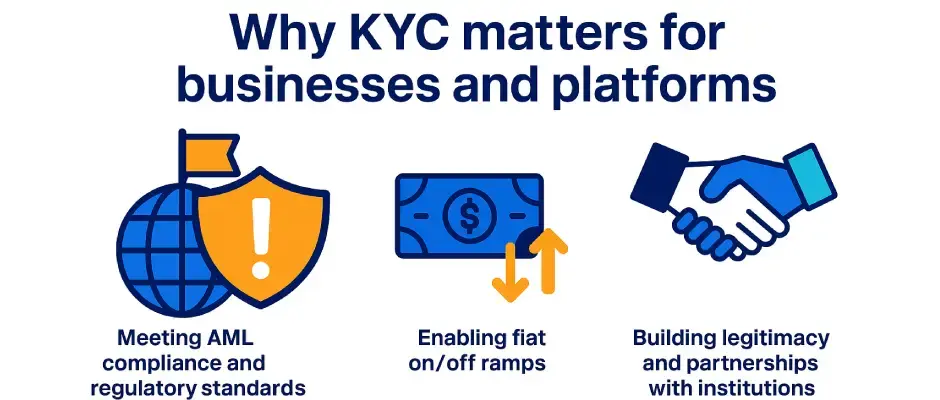
Identity verification is only the first step. You must immediately screen the user against global sanctions lists, politically exposed persons (PEP) databases, and adverse media. Use an AML screening tool that updates these lists in real-time. This step prevents onboarding bad actors and ensures your protocol remains compliant with international financial regulations.
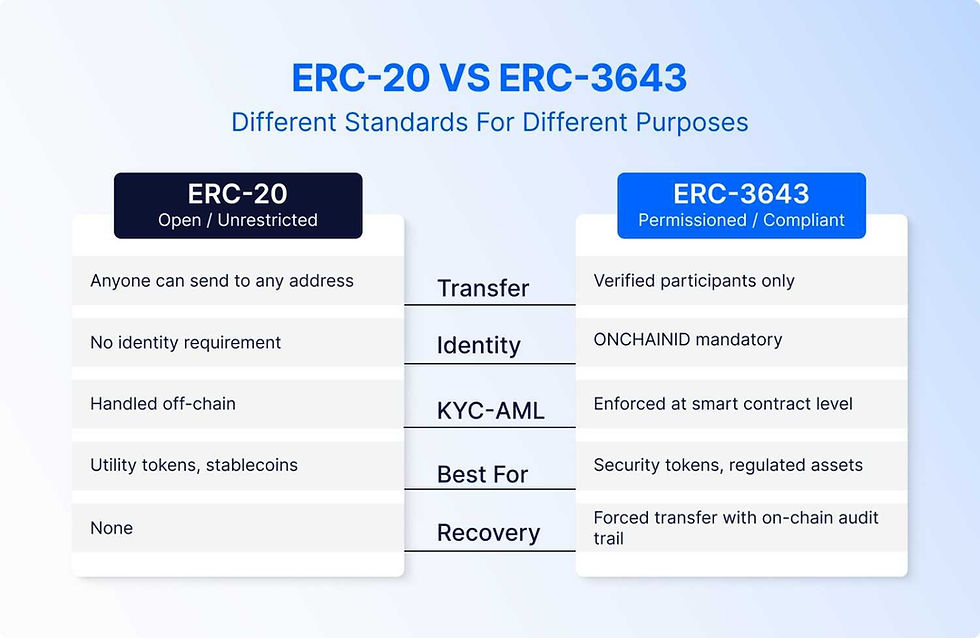
Once verified, the user should receive a verifiable credential (VC) or a zero-knowledge proof on-chain. This credential acts as a reusable token of identity that can be presented to different protocols without re-verifying. This reduces user fatigue and allows for seamless interaction across the DeFi ecosystem while maintaining a clear audit trail for regulators.
Compliance is not a one-time event. Implement continuous monitoring that flags suspicious transactions based on risk parameters. This includes monitoring for interactions with sanctioned addresses, unusual transaction volumes, or rapid movement of funds. Regular re-KYC cadences should also be enforced, with high-risk customers requiring updates every two years and low-risk users every ten years.
| Feature | Provider A | Provider B |
|---|---|---|
| Real-time AML Screening | Yes | Yes |
| ZK-Proof Integration | API-based | API-based |
| White-label UI | Limited | Limited |
Spotting Weak On-Chain KYC Options
The 2026 regulatory landscape demands precise identity verification, yet many providers still rely on outdated, manual processes. You need to look for solutions that automate periodic re-KYC, such as checking high-risk customers every two years, rather than those requiring full re-verification every decade. Weak options often fail to integrate seamlessly with smart contracts, forcing users to upload documents repeatedly instead of using cryptographic proofs.
Be wary of platforms that claim "no KYC" for all users. While some centralized exchanges like KuCoin or MEXC allow limited unverified trading, they enforce strict withdrawal caps. Relying on these loopholes is a compliance mistake. Real on-chain KYC uses oracles to verify identity privately, ensuring you meet AML standards without exposing raw data. Always choose systems that offer ongoing monitoring via API, not just one-time checks.
Tracking Compliance Costs
Compliance isn't free. Monitor the cost of verification through market trends.
On-chain kyc 2026: what to check next
What is the KYC rule for 2026?
The 2026 regulatory landscape shifts from one-time verification to continuous compliance. High-risk customers must now undergo periodic re-KYC every two years, while medium-risk users are subject to checks every eight years. Low-risk categories have a ten-year cycle, though specific extensions for these deadlines were noted for mid-2026. This cadence ensures that identity data remains current without requiring constant friction for every transaction.
What is on-chain KYC?
On-chain KYC uses smart contracts and oracles to verify user identity directly on the blockchain. Instead of sharing raw personal data, institutions can rely on cryptographic proofs to meet anti-money laundering standards. This approach preserves user privacy while allowing decentralized applications to confirm that a wallet holder has passed necessary compliance checks. It effectively bridges the gap between traditional regulatory requirements and decentralized finance infrastructure.
Which crypto exchange has no KYC?
Some centralized exchanges still offer limited access without full identity verification. Platforms like KuCoin, MEXC, and Bybit allow unverified users to trade, but with significant restrictions. These limits typically cap daily withdrawals between 0.1 and 2 BTC, depending on the specific exchange. While this provides some privacy, it severely limits liquidity and large-scale trading capabilities compared to fully verified accounts.
Do I need to verify my identity for DeFi?
Most mainstream DeFi protocols are beginning to integrate on-chain KYC attestations to comply with emerging regulations. While purely decentralized exchanges (DEXs) may not require immediate verification, lending platforms and yield aggregators increasingly demand proof of identity to prevent sanctions violations. Users should expect to link verified on-chain identities to access higher yield tiers or larger borrowing limits in the 2026 ecosystem.
No comments yet. Be the first to share your thoughts!